The Auckland Women’s Health Council is a voluntary organisation of individual women and women’s groups who have an interest in and commitment to women’s health issues. The organisation was formed in 1988 to provide a voice on women’s health issues in the Auckland region.
The Council has a special interest in patient rights, informed consent and decision-making in health care, health consumer advocacy, the Code of Health Consumers’ Rights, the National Cervical Screening Programme, and ethics – issues that were highlighted during the Inquiry into the treatment of cervical cancer at National Women’s Hospital in 1987-88 and in the recommendations contained in the report known as the Cartwright Report.
Our Philosophy
The Auckland Women’s Health Council is a feminist organisation. We believe:
- Women users of health services have the right to make informed decisions regarding their own health care and treatment.
- Women/wāhine have the right to the information necessary to enable them to make informed decisions.
- Health care must be accessible, affordable and available as well as culturally appropriate and acceptable to women/wāhine.
- Consumer participation on all decision-making processes for health care services is essential.
Vision
All women/wāhine in Tāmaki Makaurau and across Aotearoa New Zealand have agency over their physical, mental, emotional and spiritual well-being and are fully informed of health services available and have access to them, particularly wāhine Māori.
Goal
To provide an independent feminist voice focused on women’s/family health and health services in Tāmaki Makaurau.
Priorities
1. That the Council works towards becoming Tangata Tiriti as an organisation: to understand our responsibilities as a good Treaty partner; and to stand with tangata whenua in their language rights, their health rights, for the rights of their tamariki and wāhine. To find ways to honour the articles of Te Tiriti.
2. That women/wāhine have the right to make informed decisions regarding their own health care and treatment.
3. That women/wāhine participate in all decision-making processes for health care services.
4. That women/wāhine have accessible, affordable, available, accountable and culturally appropriate health care services.
5. That the work of the Council continues to be sustainable and to grow.
6. Increasing our links and collaborations with other women’s health related organisations.
The August-September 2026 Newsletter is Out Now!
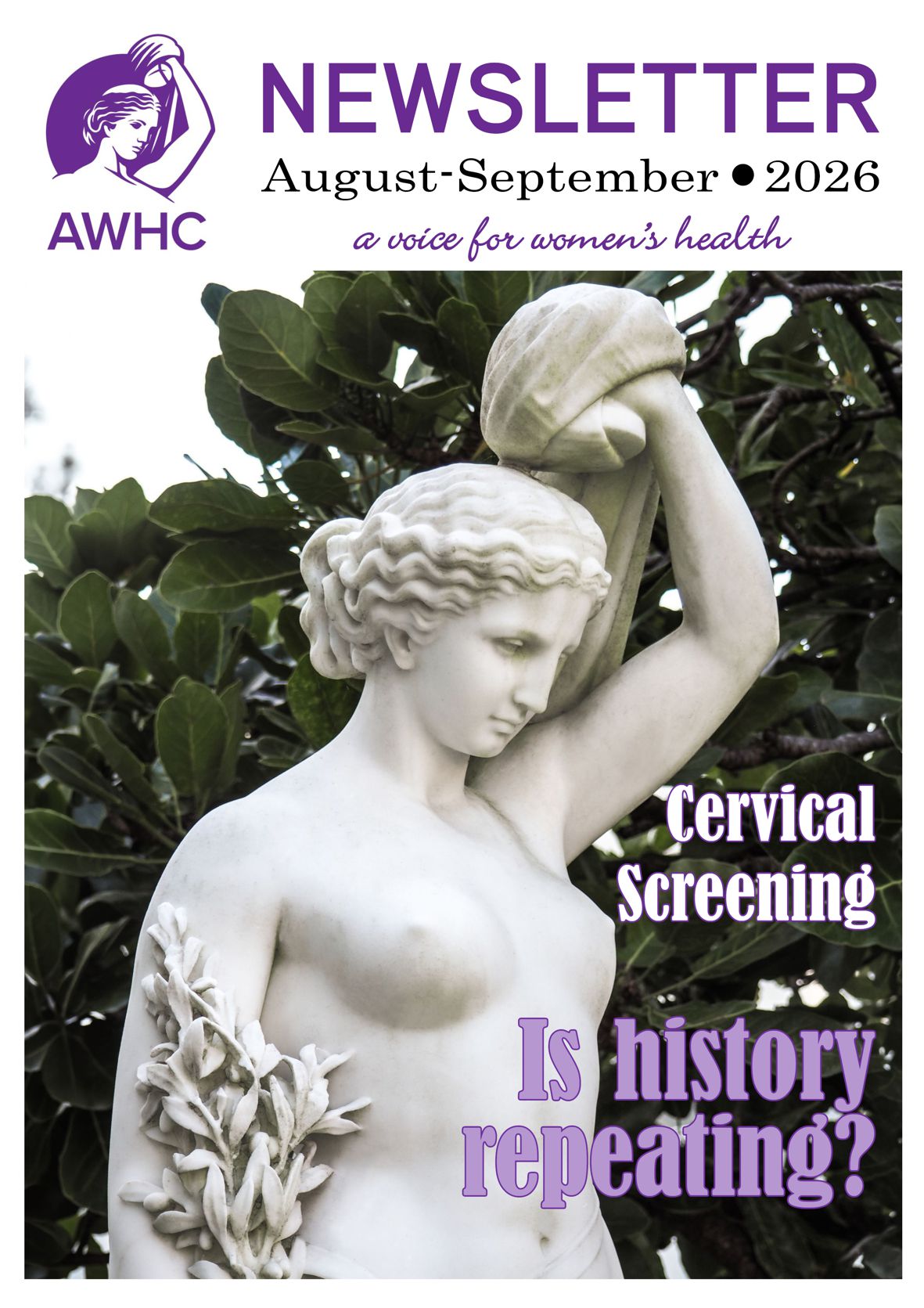
In this edition:
Mobilising Aotearoa to Save our Health System
Aotearoa Casts First Light on World Patient Safety Day
Damning Report on NCSP Register Raises Significant Concerns
Sidelining Women’s Health
The Forbidden Pharmacy
Hikoi 4 Health – Vanbulance Tour + Book Launch
Rethinking Health: Lessons from the Hikoi 4 Health— Book Review
Frock-up for Frocktober
Research & News Briefs
- New Endometriosis Guidelines
- Rewriting the Rules on Period Pain
- New Hope for Advanced Pancreatic Cancer
- Kaitiaki Hauora are in Campaign Mode
- Poster Campaign
- Bluff to Cape Reinga Roady
Our Community
Our Supporters



Auckland Women’s Health Council also acknowledges and thanks our funders, Lottery Community and COGS. Without their ongoing funding and support we would not be able to continue our work.